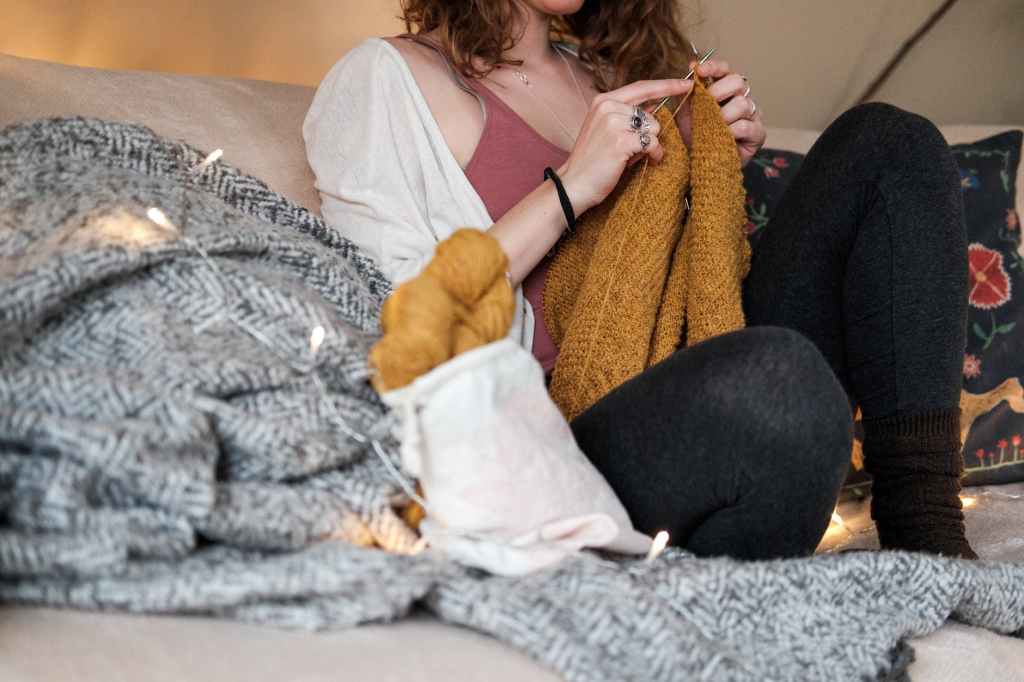
It IS possible. I do it and you can, too. But, let’s just start out by clarifying that a very small percentage of makers and designers will turn it into a full-time gig without working for a yarn company, publishing company, or being an influencer with a large following.
In these blogs, I sometimes get frustrated with too much exposition and back story, when the real reason you’re here is because you saw “knitting” and “side hustle” in the title, right? So, here we go.
Etsy
Etsy is a great platform for beginners and for seasoned creatives. When I first opened my Etsy shop years ago, I listed finished crocheted and knitted pieces that my mom and I both worked up. The items varied in price depending on the cost of the materials and the size of the project/ how long it took to make. It’s important to have multiple items in your shop and offer a range of prices. Someone may visit your site interested in something specific, but they may decide it’s outside of their price range. If you have smaller pieces at a smaller price, they can still buy from your shop instead of looking somewhere else. You have full creative freedom here. As you make sales and gain good ratings, your shop item will become for visible in searches within the Etsy website. If you are able, it may be a good option to offer custom pieces. Make sure to include tag words like “custom” and “personalized” in your product title and item description so your shop is optimized to show up in a broader range of searches. Try typing into the Esty search tab some words that describe what you are selling so you can see other items similar to yours and how they’re titled and described.
Test Knitting
Tons of yarn companies, small yarn brands, knitting magazines, yarn dyers, and indie designers are always on the lookout for good test knitters. Test knitting is taking an unpublished pattern and working it from start to finish, offering notes on comprehension, pattern mistakes, and any information that you feel would make the pattern it’s best. The designer or editor will compile the information from all of the testers who made that piece, and revise the pattern before publishing.
I think in today’s market, having a social media account, such as Instagram, to use as a free online portfolio of sorts makes all the difference. This is where designers are going to go to see what you can produce. Many, more main stream entities that have a website will usually offer a place to sign up to be included in an email blast whenever there is a new design to be tested. Check the footer menu or drop down menu of these sites. Also, always send a “Contact Us” correspondence when available on designers’ sites to introduce yourself and make it known that you are available for pattern testing. Often times, designers will have a place on their website where you can submit your email to be included in test calls. Ravelry.com has plenty of groups and forums for test knitters as well.
The actual testing process usually has a quick turnaround and a stiff deadline you’ll need to adhere to. Not doing so will result in that designer not asking you back to test. Most often, the compensation for testing new designs is a copy/download of the finished pattern and potentially one or two additional free patterns from their independently published patterns. You will likely be asked to use your own material when testing for an independent designer but you generally get to keep the finished product. If the test is for a yarn dyer or yarn company, generally the material will be provided for the test, but you will have to send in the finished piece.
Test knitting may not be lucrative, but it does have some great benefits to reduce the cost of your knitting habit
Sample Knitting
Sample knitting is knitting the garment from the finished pattern, usually for photography purposes. My experience has been test knitting for publications and magazines. I am an independent contractor for a publishing company and they reach out when they need samples knit up. The deadlines are generally 4 weeks for a garment from initial email to when the finished piece needs to be received back to their office. The company ships the material straight to you and you are responsible to ship the garment along with any leftover material. Compensation generally consists of about $100- $500 depending on the size of the piece.
I got my start doing this (by sheer chance I might add) by taking a class with the editor of a magazine at Vogue Knitting Live! in NYC. I followed up with her about a week later and let her know I was available for knitting work. She asked me to come into the office for a meeting and bring some samples fo garments I’ve made. The rest, as they say, is history.
I would recommend to anyone wanting to get started in sample knitting for companies to reach out via email through the website of any entity you might be interested in knitting for.
Published/Self-published Patterns
Designing and pattern writing is where, I think, the best side hustle is. This is the passive, one-and-done avenue that will, at the very least, feed your knitting habit.
Ravelry.com is the largest platform for self-publishing patterns. You will find just about every pattern that ever existed on the website. Once you have a designer account created, you’ll upload your pattern and photo/s, set your price per download, and activate the listing. I’ll always announce on social media when I have a new pattern published, and often times offer a discount for the first week or so of the pattern release to drum up interest. Lion Brand Yarn has always been great for sharing patterns on social media when you’ve published a pattern using their yarn. It really helps the designer increase awareness about the new pattern available, so definitely tag any company involved in the making of the pattern when you post about it’s release.
Lovecrafts.com is another great platform for designers to publish and sell patterns. I love this website because not only can you sell your pattern, but knitters and crocheters can buy the material through the site as well. I’ve had just as much success from lovecrafts.com as I have from selling patterns on other websites. Their designer’s tools are very user-friendly for uploading patterns and viewing sales and invoices.
Submitting patterns and designing for publications will provide more exposure for you as a designers and you will generally receive royalties for as long as that company owns the pattern- usually around 10 years. You will also be paid a stipend up front upon submission of the finished piece. That stipend may or may not include the cost of material depending on whether you were responsible for buying the material or the company sent it to you. These details will all be stated in your contract. To get started, go to the websites of your favorite textile publication and scroll to the bottom. In the footer menu there will usually be a link for “designers” or “jobs”, etc.
These are my favorite design books for inspiration and technical knowledge:
- Japanese Knitting Stitch Bible (tons of stitch pattern and motif inspo)
- Knitwear Design Workshop (Shirley Paden is a pillar of the knitwear design community)
- Designing Knitwear (this one is currently on sale and it’s one of my go-to handbooks)
Be sure to follow me on Instagram @midwesthookandneedle and follow my blog for weekly articles!
 Midwest Hook & Needle
Leave a comment